Acoustic Engineering Insights The Physics of Acoustic Isolation in Soundproof Aluminum Windows
Understanding decibel attenuation, Sound Transmission Class (STC), Outdoor-Indoor Transmission Class (OITC), and why standard windows fail against urban noise pollution.
In modern architectural design, urban soundscapes present complex acoustic challenges. From low-frequency heavy truck motor rumble (50 Hz – 250 Hz) to mid-frequency highway traffic (500 Hz – 1000 Hz) and high-frequency jet engine whistle (2000 Hz – 4000 Hz), effective acoustic dampening requires far more than thick glass. At Guangdong SPD Doors & Windows Technology Co., Ltd., soundproof aluminum windows are engineered as integrated acoustic systems where the frame profile, glass buildup, perimeter weatherstripping, and installation mechanics operate in perfect harmony.
Key Acoustic Metrics for B2B Procurement Managers: - STC (Sound Transmission Class): Measures interior sound insulation against speech, television, and mid-to-high frequency noises. Standard single-pane windows achieve STC 26–28; specialized SPD soundproof windows achieve STC 40–48+.
- OITC (Outdoor-Indoor Transmission Class): Evaluates barrier performance against low-frequency outdoor noise sources such as aircraft, freight trains, and heavy traffic.
- Rw (Weighted Sound Reduction Index): The ISO international standard rating for airborne sound insulation, expressed in decibels (dB).
1. Disruption of Sympathetic Resonance via Asymmetric Laminated Glazing
A common misconception among commercial buyers is that standard double-glazed insulating glass units (IGUs)—for example, 6mm glass + 12mm air gap + 6mm glass—provide sufficient noise reduction. In reality, identical glass thickness induces a acoustic weakness known as coincidence frequency resonance. When sound waves hit the first pane, energy transfers directly across the air cavity to the second pane at matching resonance frequencies.
To eliminate this phenomenon, Guangdong SPD Doors & Windows Technology Co., Ltd. utilizes asymmetric laminated acoustic glass configurations. By combining glass panes of unequal thickness (e.g., 6mm outer pane + 12A Argon air space + 8.76mm acoustic PVB laminated inner pane), different sound frequencies are damped at different interfaces. The visco-elastic polyvinyl butyral (PVB) or Saflex acoustic interlayer converts sound wave kinetic energy into harmless heat energy, dramatically dampening noise transmission across the spectrum.
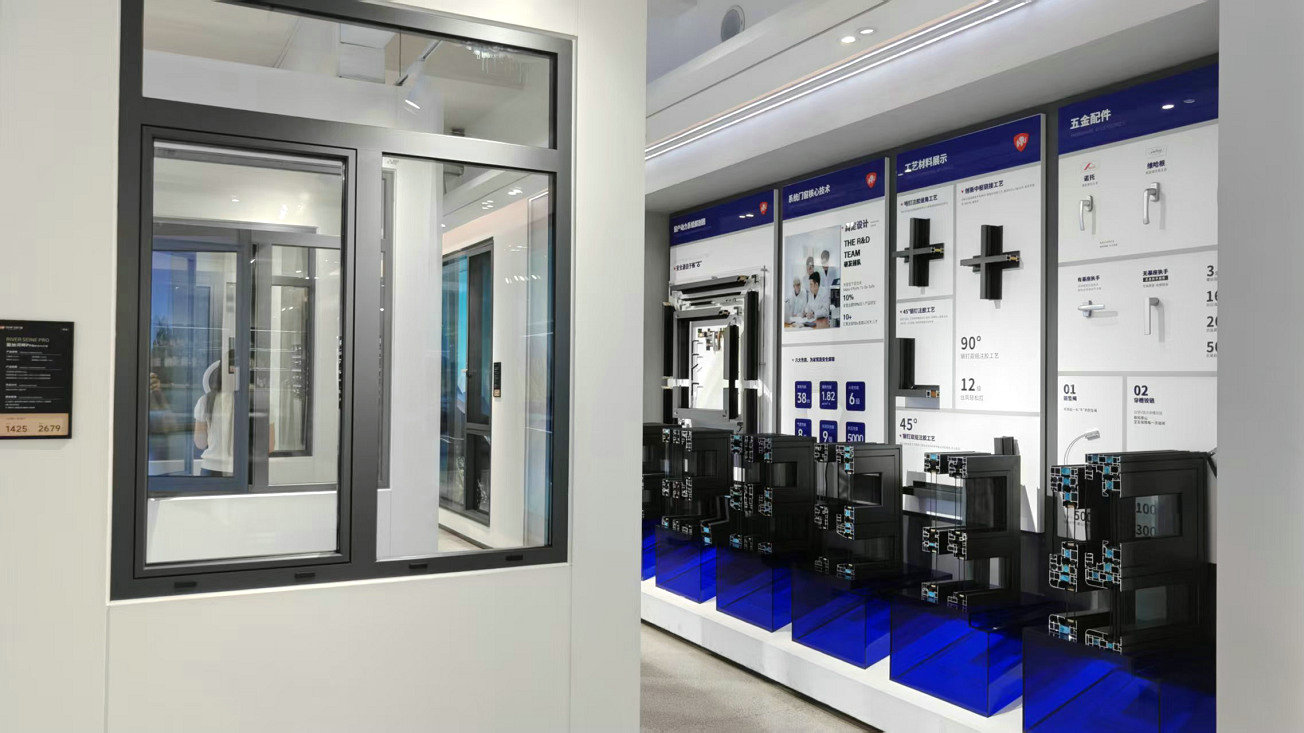
Figure 1: Cross-sectional acoustic engineering design of SPD multi-chamber soundproof aluminum profile system.
2. Multi-Chamber PA66 Thermal Breaks & Air-Tightness Barrier Design
Sound travels like water—it finds every micro-gap. Even the highest-rated acoustic glass is rendered ineffective if sound leaks through hollow aluminum frames or loose sashes. Aluminum by itself is a solid conductor of both thermal energy and acoustic vibrations. Guangdong SPD Doors & Windows Technology Co., Ltd. overcomes frame transmission by employing structural multi-chamber thermal barriers made from 25% glass-fiber reinforced polyamide (PA66GF25).
The interior structure of our soundproof aluminum window frames features separate acoustic insulation chambers filled with high-density hydrophobic acoustic foam. Combined with continuous triple-seal EPDM (Ethylene Propylene Diene Monomer) gasket loops and precision multi-point locking hardware, our windows maintain air infiltration rates below 0.05 cfm/ft², effectively sealing out airborne noise leakage.