Top 10 Aluminum Ventilation Windows Supplier & Exporter

Global B2B Sourcing Guide 2025: Engineering Benchmarks, Thermal Efficiency Analysis, Micro-Ventilation Systems & Supply Chain Audits

Curated Product Catalog

Featured Aluminum Ventilation Windows & Architectural Systems

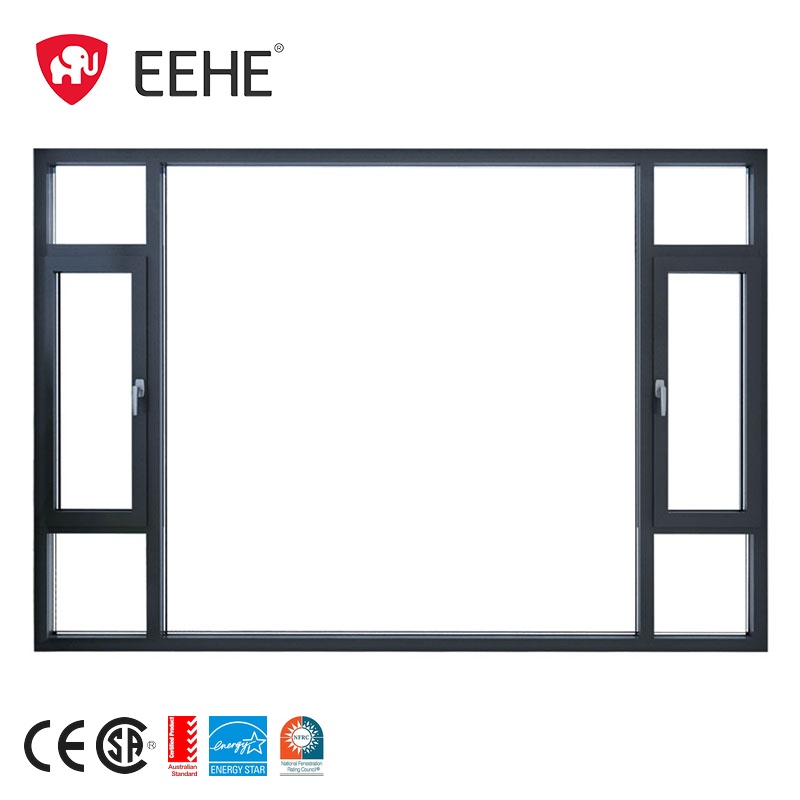
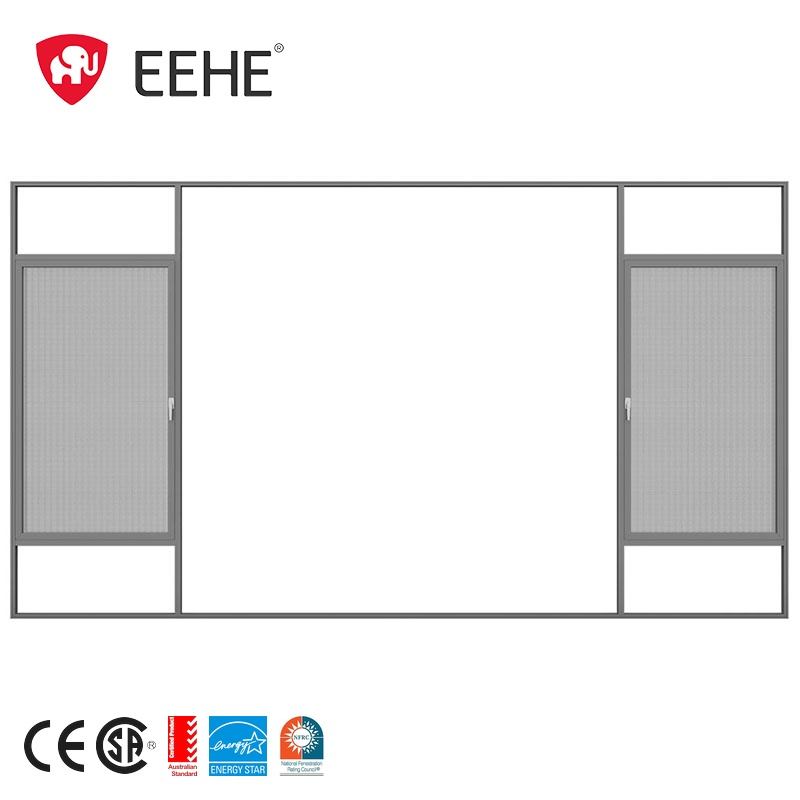
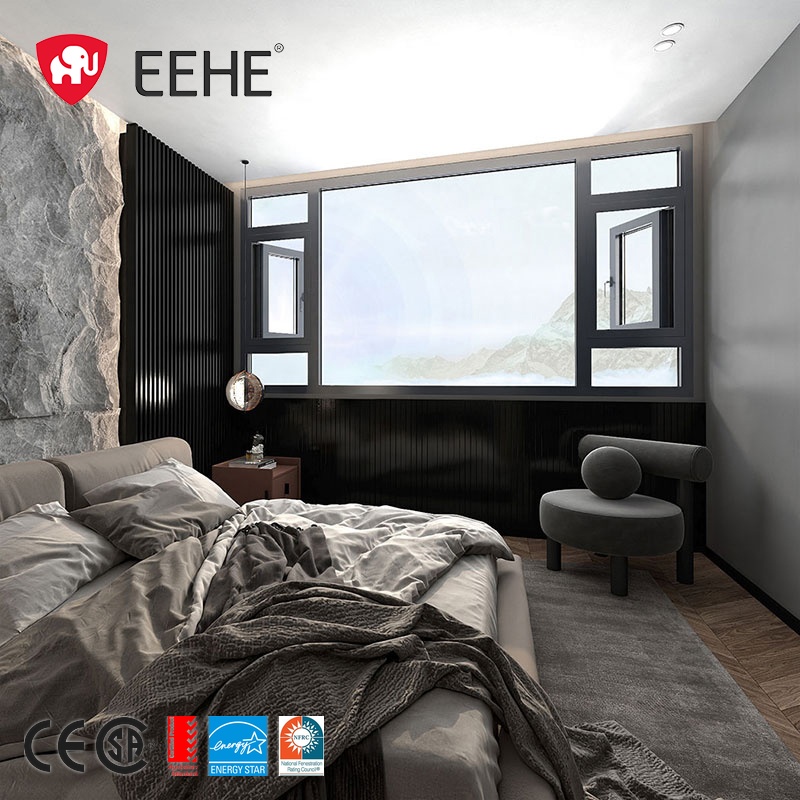
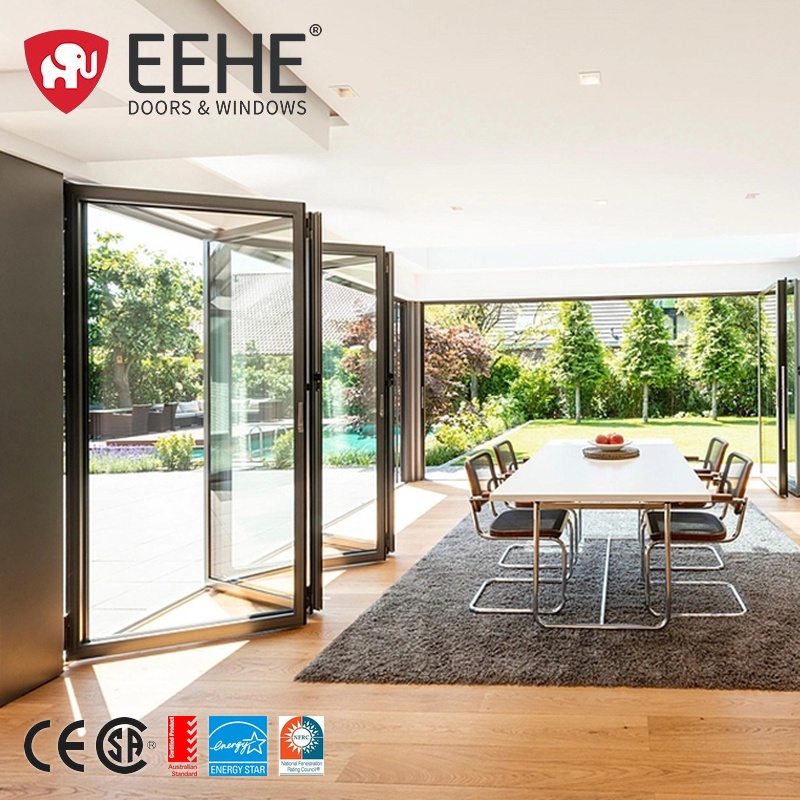
Engineered to comply with AS2047, NFRC, CE, and CSA standards. Discover our top-tier thermally broken aluminum windows and exterior door systems configured for commercial, residential, and high-performance villa projects.

100,000 m²
Foshan Production Facility
560 +
Skilled Technical Workforce
SGS
On-Site Audit Verified
6 Patents
Structural & Sealing R&D
Technical Sourcing Framework

Evaluating Top 10 Aluminum Ventilation Window Suppliers & Exporters

A rigorous engineering guide for architectural specifiers, general contractors, and facade procurement directors evaluating Chinese OEM/ODM manufacturing capability.

E-E-A-T Sourcing Note for Technical Auditors

In modern architectural fenestration, simple frame durability is no longer the sole metric of supplier evaluation. Premium aluminum ventilation windows must harmonize three conflicting physics factors: high structural wind pressure resistance (ASTM E330), thermal break insulation performance ($U$-factor ≤ 1.4 $\text{W/m}^2\text{K}$), and continuous controlled air exchange without draft turbulence or water infiltration (ASTM E331 Class 4). Below is the evaluation benchmark practiced by leading structural facade engineers globally.

1. Polyamide Thermal Break Architecture (PA66GF25 vs. Low-Grade PVC)

The core thermal integrity of aluminum window frames relies on the thermal barrier strip connecting the inner and outer extruded aluminum profiles. Top-tier exporters use **Polyamide 66 with 25% Glass Fiber (PA66GF25)** imported or engineered under strict mechanical tolerances. PA66GF25 shares an almost identical thermal expansion coefficient ($2.3 \times 10^{-5} /\text{K}$) with architectural 6063-T5 aluminum alloy. This prevents delamination, profile warping, or structural air leaks during extreme seasonal temperature swings ($-30^\circ\text{C}$ to $+60^\circ\text{C}$). Buyers should avoid suppliers substituting cheap PVC strips, which deteriorate under UV exposure and lead to structural frame collapse under cyclic wind pressure.

2. Micro-Ventilation Hardware Integration & Safety Mechanisms

Natural ventilation strategies require windows to operate safely in high-rise residential and commercial installations. Micro-ventilation systems (such as 15-degree inward tilt-turn mechanisms or perimeter gap-ventilation stays) allow continuous background air circulation while maintaining robust structural locking points. Key engineering checks include:

  • Concealed Friction Stays: Manufactured from SUS304 or SUS316 stainless steel, tested to withstand 50,000 operational cycles under maximum sash loading weight.
  • Anti-Fall Security Locks: Integrated mechanical restrictors preventing accidental sash detachment during sudden thermal updrafts or hurricane-force wind gusts.
  • Burglar Resistance: Multi-point mushroom-head locking cams achieving EN 1627 RC2/RC3 anti-burglary standards.

3. Acoustic Transmission Loss & Multi-Chamber EPDM Sealing

Urban acoustic comfort requires fenestration to block low-frequency traffic noise (125 Hz – 500 Hz). Leading aluminum window manufacturers implement a triple-seal system utilizing **EPDM (Ethylene Propylene Diene Monomer)** co-extruded cellular rubber gaskets. When combined with asymmetric acoustic laminated glass (e.g., 6mm Tempered + 1.14mm Acoustic PVB + 6mm Low-E), total sound reduction (Rw) reaches 40–45 dB, keeping interior ambient sound under 35 dBA even along active arterial roads.

4. Structural Extrusion Profile Wall Thickness & Alloy Grade

Compliance with global structural standards (such as Australia’s AS2047, North America’s AAMA/WDMA/CSA 101/I.S.2/A440, or Europe’s EN 14351-1) demands strict raw material verification. Primary extrusions must utilize virgin **6063-T5 or 6063-T6 aluminum billets**. Structural frame nominal wall thickness for heavy-duty casement windows must measure at least 1.4mm to 2.0mm, while commercial curtain-wall integrated ventilation units often require wall thicknesses exceeding 2.5mm to pass positive/negative wind loads up to 5000 Pa.

Industry Outlook

Future Procurement & Technological Development Trends

How evolving zero-carbon building codes, smart home automation, and global supply chain compliance are redefining the architectural aluminum window industry.

Trend 1: Zero-Energy Building (ZEB) & Ultra-Low U-Value Mandates

Global construction mandates (such as the EU Energy Performance of Buildings Directive and US Title 24) are pushing window overall heat transfer coefficients ($U$-factors) down to $\le 0.8 \text{ W/m}^2\text{K}$. Expect rapid transition to triple/quadruple glass units with double Low-E soft coatings, warm-edge composite spacers (e.g., Technoform / Swisspacer), and Krypton gas fill as standard B2B specifications.

Trend 2: Smart Actuation & Automated IAQ Sensors

Future aluminum ventilation windows are increasingly integrated into smart Building Management Systems (BMS). Electric chain actuators connected to $\text{CO}_2$, VOC, and humidity sensors automatically tilt window sashes for micro-ventilation, auto-closing upon sensing rain or high exterior wind speeds.

Trend 3: Carbon Footprint Traceability & EPD Certification

With the implementation of the EU Carbon Border Adjustment Mechanism (CBAM), enterprise buyers now audit supplier scope 1, 2, and 3 emissions. Aluminum window exporters using certified low-carbon recycled aluminum billets (smelted via hydroelectric power) backed by verified Environmental Product Declarations (EPDs) hold decisive procurement advantages.

Trend 4: Slim-Sightline Minimalist Architectural Frames

Architectural aesthetics demand maximum daylight transmission with structural frame sightlines reduced under 45mm. Modern aluminum ventilation windows achieve this via structural silicone glazing (SSG) bonding, concealed hinges, and flush frame-to-sash profile alignment without sacrificing water tightness.

Engineering Data

Technical Standard Performance Specifications

Standard parameters for Guangdong SPD aluminum ventilation windows available for international OEM/ODM projects.

Performance Parameter Tested Specification Standard Engineering Capabilities & Materials
Thermal Insulation ($U$-Factor) NFRC 100 / EN ISO 10077-2 0.8 to 1.6 $\text{W/m}^2\text{K}$ (Configurable via PA66GF25 thermal strip width 20mm-34mm)
Acoustic Isolation (Rw / STC) ASTM E90 / ISO 10140 STC 35 to STC 45 dB (Utilizing asymmetric double/triple PVB acoustic laminated glass)
Air Infiltration Rate ASTM E283 / AS4420.2 / EN 12207 Class 4 Standard (< 0.1 $\text{m}^3/\text{h}\cdot\text{m}^2$ at 100 Pa pressure differential)
Water Resistance Rating ASTM E331 / AS4420.3 / EN 12208 700 Pa to 1050 Pa static water head resistance (Multi-stage pressure-equalized drainage)
Structural Wind Pressure ASTM E330 / AS4420.2 / EN 12210 Serviceability: 3000 Pa, Ultimate: up to 6000 Pa (6063-T6 alloy structural reinforcement)
Surface Finish Standard AAMA 2605 / AAMA 2604 / Qualicoat Fluorocarbon PVDF (3-coat 10-year+ anti-fading warranty), Anodized (15-25μm), Powder Coat
Hardware & Cycle Test EN 13126 / AAMA 904 50,000+ opening cycles; Siegenia, Hoppe, or custom heavy-duty SUS304 friction stays
Factory Verification

Guangdong SPD Doors & Windows Technology Co., Ltd.

Located in Foshan, China—the global epicenter of architectural aluminum extrusion and fenestration engineering.

Verified Factory Strengths (SGS On-Site Audited)

Guangdong SPD Doors & Windows Technology Co., Ltd. operates a state-of-the-art 100,000 m² manufacturing facility in Dali Town, Foshan, employing over 560 skilled personnel. By controlling the entire manufacturing line—from precision extrusion profile processing, thermal break strip insertion, glass cutting, tempering, double-glazing sealing, to robotic corner crimping—SPD guarantees absolute dimensional accuracy and structural performance for large-scale export projects.

Complete Supply Chain Control

Situated inside China’s primary aluminum industrial cluster, SPD directly sources top-grade billet alloys, PVDF fluorocarbon coatings, and premium glass sheets with minimal lead-times, passing substantial cost and schedule efficiencies to international project developers.

6 Proprietary Engineering Patents

Our dedicated R&D team holds 6 structural and sealing design patents, including multi-stage drainage chamber configurations, anti-pinch safety stays, and high-load corner crimping structural anchors for cyclone-prone zones.

Export Packaging & Ocean Logistics

Each unit undergoes final quality inspection before wrapping in protective film, high-density foam edge guards, and custom IPPC-certified ISPM 15 wooden crates. Labeled per shop drawings for seamless site assembly.

Buyer Guidelines

Frequently Asked Questions for B2B Procurement

Addressing essential technical, contractual, and logistics questions asked by importers, general contractors, and project specifiers.

Is SPD a direct aluminum window manufacturer or a trading intermediary?
Guangdong SPD Doors & Windows Technology Co., Ltd. is a direct OEM/ODM custom manufacturer operating its own 100,000 m² facility in Dali Town, Foshan, Guangdong. Our manufacturing facility, workforce capacity (560+ employees), automated machinery, and quality control procedures have been audited on-site by SGS (Société Générale de Surveillance). Third-party inspection documentation is available upon request.
Can SPD produce windows according to custom CAD/BIM architectural drawings?
Yes. Over 90% of our output is fully customized to client architectural specification schedules. Our engineering department reviews CAD, Revit, or structural shop drawings to verify wind load requirements, deflection limits, frame profile selection, glass performance metrics, and opening mechanism feasibility prior to sample or mass production.
What international certification standards do SPD window systems hold?
Our window and door product series comply with major market standards:
  • North America: NFRC thermal certification and CSA testing standards.
  • Australia & New Zealand: AS2047 structural and weather performance testing, AS1288 architectural glass compliance.
  • Europe: CE mark compliance under EN 14351-1.
Test reports per product series are provided during contract finalization.
What details are required to obtain an accurate formal quotation?
To provide a precise engineering estimation, please submit:
  1. Window and door schedule or architectural CAD elevation drawings showing opening sizes and quantities.
  2. Thermal requirements ($U$-factor, SHGC) or glass specification (e.g., 6mm Low-E + 12Ar + 6mm Tempered).
  3. Frame finish preferences (Powder Coating, PVDF, Anodized, RAL Color Code).
  4. Target delivery port for sea freight container calculation.
How does SPD protect glass and powder-coated frames during ocean transit?
Each window unit undergoes finished-product inspection before receiving multi-layer protection: protective surface film on aluminum extrusions, shock-absorbing foam on corners, vacuum-sealed glass packing, and enclosure inside heavy-duty fully enclosed plywood crates (fumigation-free). Crates feature lifting points and bottom clearance for fork-lift handling without glass breakage risk.
What is the standard production lead time for export orders?
Standard lead times for sample production are 15-20 days following shop drawing approval. Full container mass production typically requires 30-40 days depending on custom extrusion die creation, specialty glass processing (e.g., triple-pane laminated units), and surface finish selection (PVDF coating requires extra curing cycles).

Ready to Engineer Your Project’s Fenestration Package?

Consult with Guangdong SPD's architectural engineering team today. Send us your project drawings or specification schedules for a turnkey proposal with factory-direct pricing, thermal analysis, and structural wind pressure calculations.

Get a Quote