High-Performance Architectural Windows & Doors
Engineered for structural soundproofing, extreme wind-load resistance, and superior thermal insulation (CE, NFRC, CSA & AS2047 Certified).

Guangdong SPD Doors & Windows Technology Co., Ltd.
Operating from China's architectural aluminum hub in Foshan, delivering engineered fenestration packages for B2B commercial and residential projects globally.
Full Customization (OEM/ODM)
Built strictly to your architectural drawings, window schedules, U-value targets, and wind-load specs. We offer custom die-extrusion profiles, thermal break depths, and specialty glazing.
Multi-Market Compliance
Tested and certified series meeting North American NFRC and CSA standards, European CE standards, and Australian AS2047 high wind and water penetration codes.
End-to-End Quality Management
Incoming aluminum alloy composition checks, heat soak testing (HST) for tempered glass, air-tightness pressure chamber testing, and final container export protective packaging.
Engineering Standards for Commercial Tempered Glass Windows
A deep dive into surface compression, thermal stress management, structural thermal break integration, and glass spec selection.
Tempered Glass Surface Compression & Safety Standards
Architectural tempered safety glass undergoes controlled thermal treatment where float glass is heated to approximately 620°C–680°C and rapidly quenched with high-pressure air streams. This process creates compressive stresses on the glass surfaces balanced by tensile stresses in the center body.
To qualify for structural architectural applications, safety glass manufactured by top Chinese wholesalers must comply with ASTM C1048 (Kind FT), EN 12150-1, and GB 15763.2. Surface compression levels must exceed 90 MPa (13,000 psi), providing 4 to 5 times higher flexural strength than standard annealed glass.
Polyamide PA66-GF25 Thermal Break Engineering
Standard aluminum is a highly conductive material ($k \approx 160 \text{ W/m}\cdot\text{K}$). Modern energy-efficient windows demand structural thermal isolation between the exterior and interior aluminum profiles to achieve low Overall Window U-factors.
We utilize precision-knurled PA66-GF25 (Polyamide 66 reinforced with 25% glass fiber) insulation strips. Glass fiber reinforcement matches the thermal expansion coefficient of aluminum ($\approx 2.3 \times 10^{-5}/\text{K}$), preventing shear stress failure under extreme temperature fluctuations (-30°C to +80°C).
When combined with multi-chamber profile designs and low-emissivity (Low-E) double or triple glazing, total system U-values drop to 1.2 – 1.6 W/m²K (0.21 – 0.28 BTU/hr·ft²·°F), meeting Passive House standards for cold climate zones.
Structural & Thermal Performance Benchmarks
| Performance Metric | Standard Configuration | High-Performance / Passive House Spec | Test Standard Compliance |
|---|---|---|---|
| Overall U-Factor (Window) | 1.8 – 2.2 W/m²K | 0.8 – 1.3 W/m²K | NFRC 100 / EN ISO 10077 |
| Glass Surface Compression | 90 – 110 MPa | > 120 MPa (HST Processed) | ASTM C1048 / EN 12150 |
| Acoustic Insulation (STC / Rw) | 32 – 36 dB | 42 – 48 dB (Laminated Acoustic IGU) | ASTM E90 / ISO 717-1 |
| Wind Pressure Resistance | Class 4 (2.5 kPa) | Class 5+ (3.5 – 5.0 kPa) | AS2047 / ASTM E330 |
| Water Penetration Resistance | 450 Pa | 700 – 1000 Pa (Deep Interlock Drain) | ASTM E547 / EN 12208 |
| Frame Surface Finish | Powder Coated (≥ 60 µm) | PVDF Fluorocarbon (≥ 40 µm, 3-coat) | AAMA 2605 / Qualicoat Class 2 |
Future Sourcing Trends for Global Buyers & Developers
Market intelligence for importers, general contractors, and real estate developers sourcing fenestration from China.
1. High-Performance Triple Glazing & Vacuum Insulated Glass (VIG)
With global green building codes (LEED v4.1, BREEAM, CALGreen) enforcing stringent energy limits, procurement is shifting rapidly from standard double glazing to Low-E triple glazing filled with 90%+ Argon gas, and ultra-thin Vacuum Insulated Glass for lightweight retrofits.
2. Integrated Sunshading & Smart Electrochromic Glass
Commercial developers are prioritizing dynamic fenestration. Motorized internal venetian blinds sealed inside dust-free IGUs and switchable electrochromic privacy glass reduce HVAC solar heat gain coefficient (SHGC) dynamically while lowering building operational costs.
3. Ultra-Slim Sightline Minimalist Sliding Systems
Architectural trends favor ultra-narrow interlocks (18mm to 25mm visible width) with high structural steel reinforcement concealed within aluminum extrusions. Large floor-to-ceiling glass panels (up to 6 meters high) now require automated motorized drives and trackless threshold drainage.
4. Supply Chain Auditability & Decarbonized Aluminum
Top international buyers require documented supply chain transparency. Sourcing low-carbon primary aluminum extrusions refined using hydropower (instead of coal power) and obtaining verified EPD (Environmental Product Declaration) certificates is becoming standard for European and American project tenders.
Product Development & Glass Metallurgy Innovations
How China's leading window manufacturers are evolving raw materials and hardware engineering.
Ultra-Clear Low-Iron Float Glass (Extra Clear)
Standard clear glass contains micro-iron oxide impurities that create a visible greenish tint, especially when toughened or stacked in double/triple glazing units. Top architectural projects now utilize low-iron float glass (iron content < 0.01%).
Low-iron glass increases Visible Light Transmittance (VLT) to over 91%, delivers true color neutrality, and significantly reduces heat absorption within the glass body, decreasing thermal stress cracking risks.
Multi-Point Compression Locking & EPDM Continuous Gaskets
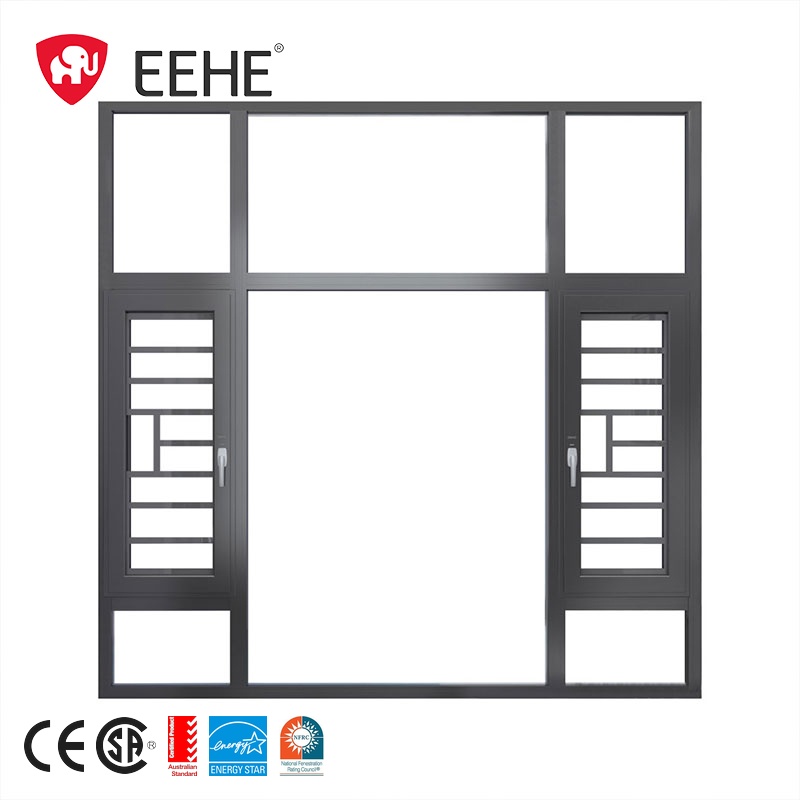
Modern outswing casement windows and tilt-and-turn units feature multi-point gear drive locks engineered from 304/316 stainless steel. When the handle engages, compression rollers pull the sash tightly against continuous co-extruded EPDM (Ethylene Propylene Diene Monomer) rubber gaskets.
This creates a multi-barrier weather seal that resists high air infiltration and driving rain while eliminating frame deformation over decades of operation.
Frequently Asked Questions by International Buyers
Direct technical and operational answers to common window and door sourcing inquiries.
Partner with China's Premier Tempered Glass Window Manufacturer
Send your project blueprints, window schedules, or custom OEM specifications directly to our engineering team. Receive factory-direct wholesale pricing, structural load assessments, and thermal CAD drawings within 24 hours.
Inquire Now