0%

Choosing among China’s top 10 aluminum casement window manufacturers takes more than comparing catalogue photos. Aluminum Casement Windows can shape a room’s daylight, ventilation, and weather protection. Yet product performance depends on more than the frame. Glass specification, hardware, seals, fabrication quality, and installation all matter. Small details show up later.

Architect Le Corbusier famously wrote, “A house is a machine for living in.” His line offers a useful lens for assessing windows: attractive design must also serve daily use. A casement sash should open smoothly, close firmly, and suit the room’s layout. Buyers should examine documented performance, available configurations, finish options, quality-control procedures, and after-sales support. Ask for project references and technical information, not just polished images. Check details carefully.

This guide introduces ten manufacturers and compares the factors that can help buyers create a practical shortlist. It considers product range, customization, manufacturing capability, and evidence supporting performance claims. The right choice can vary with climate, building type, budget, and project requirements. No ranking is perfect. Real projects are messier than tables suggest. Treat this list as a starting point, then verify specifications and samples directly with each supplier. A close inspection of corner joints, seals, and hardware can reveal more than a showroom photograph. Reliable decisions come from matching documented product details to the demands of the actual project.
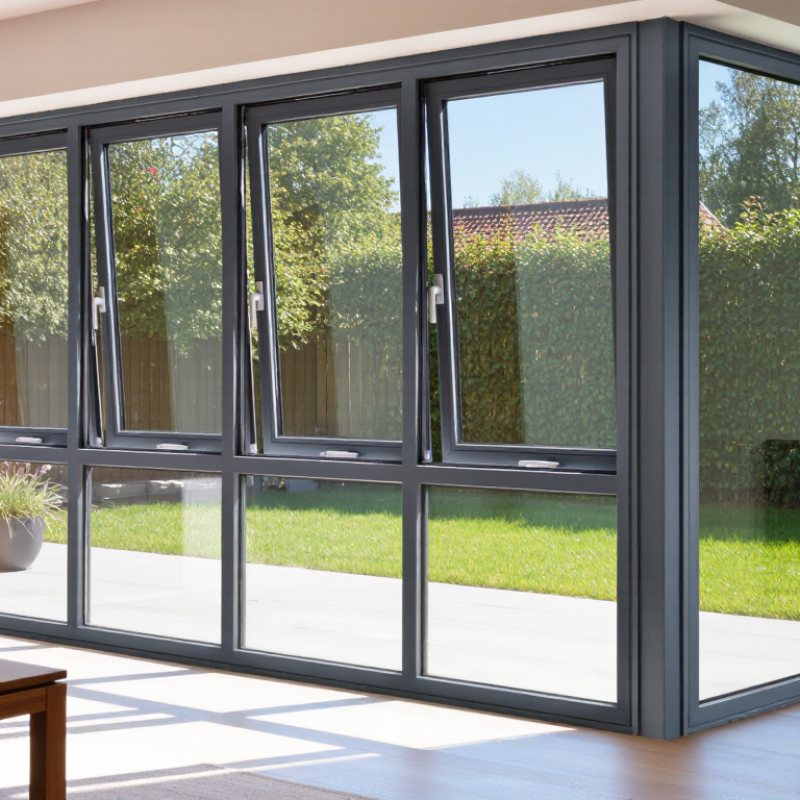
China Top 10 Aluminum Casement Window Manufacturers

Understanding Aluminum Casement Windows and Their Key Features

Aluminum casement windows open on side hinges, allowing the sash to swing outward like a small door. A handle pulls the sash against perimeter seals when closed. This design can provide a broad opening for ventilation and an unobstructed view. It also makes cleaning the inside glass straightforward, though exterior access may still be difficult on upper floors.

Aluminum frames are valued for their slim profiles and strength. Narrow sightlines let more daylight into a room without requiring bulky frame sections. A durable finish helps protect the surface, but scratches or poor installation can still affect long-term appearance. Check the frame’s corner joints, drainage paths, and hardware before choosing a unit. Details matter.

Casement windows can seal tightly when properly fitted, which may help limit drafts and outside noise. Performance depends on the glazing, weather seals, installation, and regular adjustment—not just the frame material. Ask about glass options and hardware suited to the window’s size and exposure. A large sash can feel heavy. It may also catch strong wind when open, so the opening position and nearby space deserve careful thought.

Aluminum Casement Windows: Typical U-Factor by Glazing Configuration

Illustrative whole-window U-factor benchmarks. Lower values indicate less heat transfer and better insulation.

Typical benchmark values are approximately 5.7 W/m²·K for single glazing, 3.0 for double clear glazing, 1.8 for double Low-E argon glazing, and 1.3 for triple Low-E argon glazing. Actual performance varies with frame design, thermal breaks, glass coatings, spacers, and test methods. Check certified product data when comparing windows.

Criteria for Evaluating China’s Aluminum Window Manufacturers

When evaluating China’s aluminum window manufacturers, look beyond profile thickness and showroom finishes. Ask for alloy grade, wall-thickness tolerances, thermal-break details, and hardware specifications. Check how frame corners are joined and whether drainage paths are clear. Details matter. A well-made sample should open smoothly, close evenly, and show consistent coating across edges and corners.

Request relevant air, water, and wind-pressure test reports, preferably from an independent laboratory. Confirm that the tested configuration matches the window size, glass, and hardware you plan to order. A certificate alone may not describe your exact product. Inspect sample units for gasket continuity, clean sealant lines, and secure glazing. Small gaps count. If possible, review production records and quality checks from a recent order, not only a display model.

Also assess the manufacturer’s project experience, technical support, and ability to explain installation requirements. Ask how packaging protects corners and glass during transport, and how defects or replacement parts are handled. Compare written specifications and warranty terms rather than relying on broad promises. A polished showroom can hide uneven batch quality; one impressive sample is not proof of consistency. That limitation deserves attention.

Profiles of China’s Top 10 Aluminum Casement Window Manufacturers

Profiles of China’s leading aluminum casement window manufacturers are most useful when they compare real production capabilities, not just catalog size. Some suppliers focus on standard residential windows; others handle custom dimensions, thermal breaks, or large project orders. Their profiles should note frame depth, hardware options, glass compatibility, and available surface finishes. Small details matter. A sample corner joint can reveal more than a polished brochure.

Manufacturing scale is only one part of the picture. A stronger profile also describes design support, production checks, packaging, and experience preparing goods for overseas shipment. Buyers can ask how each factory measures frame tolerance and inspects opening mechanisms. Clear answers build confidence. Vague claims do not. Product certificates and test reports should be checked for relevance to the exact window system, rather than accepted at face value.

The ten manufacturers may differ in customization, lead times, and communication quality, so a single ranking can hide important trade-offs. A broad product range is useful, but it may not mean every configuration receives equal engineering attention. That is worth questioning. Compare drawings, sample finishes, and written specifications before making a decision. Even then, factory visits or independent inspections may be difficult to arrange, and no profile can replace checking the product intended for your project.

Product Ranges, Certifications, and Manufacturing Capabilities

A review of China’s leading aluminum casement window manufacturers should compare more than catalog photos. Product ranges often include inward- or outward-opening windows, fixed panels, thermal-break frames, and double- or triple-glazed options. Ask for drawings showing frame depth, glass thickness, hardware positions, and drainage details. Small differences matter.

Certifications need careful checking. Request current certificates and test reports for the exact window series, not just the factory. ISO 9001 describes a quality-management system; it does not prove that every product meets a project’s performance requirements. Air leakage, water resistance, and structural test results should match the intended market and configuration. Details matter.

Manufacturing capability is visible in the process. Ask whether the factory controls aluminum cutting, CNC machining, coating, assembly, and final inspection, or outsources key steps. Photos of production lines help, but sample measurements and inspection records provide stronger evidence. Also confirm order capacity, lead times, packaging, and replacement-part support. A polished catalog can still leave gaps. Even experienced buyers may overlook installation tolerances, so compare written specifications before placing an order.

China Top 10 Aluminum Casement Window Manufacturers - Product Ranges, Certifications, and Manufacturing Capabilities

Data note: The entries below are anonymized, illustrative capability profiles—not a verified ranking or claims about specific manufacturers. Product configurations are representative of common aluminum casement window offerings. Listed standards are relevant market standards; certification and test reports must be verified for each supplier, product, and destination market.

Profile Representative Product Range Common Configuration Options Relevant Standards or Certifications to Verify Manufacturing Capabilities to Assess Best-Fit Project Types
Profile 01 Thermally broken aluminum casement windows for residential buildings Single- and double-sash; inward- or outward-opening; fixed-light combinations GB/T 8478-2020; ISO 9001 quality-management certification, if claimed; product-specific test reports Profile cutting and machining; corner assembly; hardware installation; glazing and final inspection New-build housing and residential renovation
Profile 02 Non-thermally broken and thermally broken casement systems Multiple frame depths; several glazing thickness options; standard and custom finishes GB/T 8478-2020; destination-market thermal, air, water, and structural test evidence Made-to-order sizing; color coordination; batch production; dimensional quality checks Cost-sensitive housing and mixed-use projects
Profile 03 High-performance casement windows for energy-conscious construction Thermal-break frames; double- or triple-glazed configurations; insulated glazing options GB/T 8478-2020; relevant local energy-code compliance; project-specific performance reports Glazing integration; gasket and drainage detailing; documented production inspection Energy-efficient homes and projects with defined envelope targets
Profile 04 Large-format casement windows and fixed-window combinations Wider openings; reinforced frame options; paired casements and fixed lights GB/T 8478-2020; structural-load testing for the proposed size and configuration Reinforcement selection; large-panel handling; project drawing and shop-drawing coordination Detached homes, apartments, and façade openings requiring larger glazed areas
Profile 05 Casement windows with integrated insect-screen options Removable or hinged screens; inward- or outward-opening sashes; multiple mesh choices GB/T 8478-2020; applicable local safety and performance requirements Screen-frame assembly; hardware matching; accessory and finish coordination Residential projects in regions where insect screening is commonly specified
Profile 06 Casement systems with enhanced weather-sealing options Multi-point locking options; compression seals; project-selected drainage details GB/T 8478-2020; air-leakage and water-penetration test reports for the offered system Seal installation; hardware adjustment; in-process checks and finished-unit inspection Projects with demanding wind-driven rain or air-infiltration requirements
Profile 07 Casement windows for coastal or high-humidity environments Corrosion-conscious hardware and finish selections; multiple frame and glazing options GB/T 8478-2020; documented coating or corrosion-resistance specifications appropriate to the project Finish selection and inspection; hardware compatibility checks; protective packaging for shipment Coastal housing and humid-climate projects, subject to project specification
Profile 08 Export-oriented casement windows configured for overseas markets Market-specific glazing, hardware, opening direction, and finish combinations For Europe, verify applicable CE marking and EN 14351-1 documentation; other markets require their own applicable evidence Order documentation; export packing; configuration control; coordination of third-party testing where required Importers and projects with destination-market compliance requirements
Profile 09 Custom-color and architectural-finish casement windows Powder-coated or other specified finishes; coordinated frame and hardware selections GB/T 8478-2020; finish specifications and test documentation required by the project Color and sample approval; finish inspection; production scheduling for custom orders Architect-led residential, hospitality, and refurbishment projects
Profile 10 Project-based casement window packages with coordinated accessories Casements combined with fixed lights; project-specific hardware, glazing, and screen options GB/T 8478-2020; verify any ISO 9001 claim and all product-specific compliance documents independently Shop-drawing coordination; repeat-order control; packaging and shipment planning Multi-unit residential developments and repeat procurement programs
Buyer verification checklist: Request current certificates and test reports that match the exact window system, dimensions, glazing, hardware, and destination market. Confirm manufacturing location, quality-control records, finish specifications, warranty terms, and sample-to-production consistency before placing an order.

How to Compare Manufacturers for Your Project

When comparing aluminum casement window manufacturers, look beyond frame prices and catalogue photos. Ask for project-specific drawings, glass specifications, hardware details, and written installation guidance. The U.S. Department of Energy estimates that windows account for about 25–30% of residential heating and cooling energy use. Performance deserves close attention.

Compare tested U-factor and solar heat gain coefficient (SHGC), not broad claims such as “energy efficient.” The National Fenestration Rating Council’s ratings help buyers compare these measures across products. For air leakage, water resistance, and structural performance, request test documentation against the applicable NAFS standard. Check the exact configuration: frame depth, opening size, glazing, and hardware can affect results. A beautiful sample is not enough. I would also review lead times, replacement-part availability, warranty exclusions, and the manufacturer’s process for handling defects. Some details are easy to overlook.

Tips: Send every shortlisted supplier the same opening sizes, site conditions, and performance targets. Ask for a sample corner or finish chip, then inspect it in daylight. Request recent test reports and confirm they match the quoted assembly. Compare responses in writing. A missed detail can happen, so clarify who verifies measurements before fabrication.

FAQS

What should I compare when reviewing aluminum casement window manufacturers?

Compare frame depth, opening direction, glass compatibility, hardware, finishes, and written specifications. A sample corner joint can reveal details a catalog photo misses.

Which window configurations are commonly available?

Options may include inward- or outward-opening casement windows, fixed panels, thermal-break frames, and double- or triple-glazed units. Check drawings for each configuration.

How can I check whether a certificate applies to a window?

Request current certificates and test reports for the exact window series and configuration. A factory certificate alone may not prove product performance.

What performance details should I verify?

Check air leakage, water resistance, and structural test results against your project requirements. The tested frame and glass should match the proposed order.

How can I assess a factory’s manufacturing capability?

Ask who handles cutting, CNC machining, coating, assembly, and final inspection. Production photos help, but measurement records provide firmer evidence.

What should I ask about production and delivery?

Confirm order capacity, lead times, packaging, and replacement-part support. Ask how frame tolerances are measured. Small gaps matter.

Does a large product range guarantee strong engineering support?

No. A wide catalog may not mean every custom size receives equal attention. Compare drawings and sample finishes; I might be overvaluing catalog breadth.

Can a manufacturer profile replace inspecting a product?

No profile can verify the exact unit planned for your project. Request samples or an independent inspection when practical, and review installation tolerances.

Conclusion

This article explores the design and practical advantages of Aluminum Casement Windows, including their outward-opening operation, ventilation potential, frame strength, and compatibility with different building styles. It also explains how to assess manufacturers in China by considering factors such as product quality, engineering support, production experience, customization options, communication, and delivery capabilities.

Readers will find an overview of ten manufacturers, with attention to their product ranges, certifications, and manufacturing resources rather than brand promotion. The article also offers a practical framework for comparing suppliers according to project requirements, including window dimensions, finishes, performance expectations, order volume, and budget. By using these considerations together, buyers can create a clearer shortlist and make a more informed choice for residential or commercial projects.

Amelia

Amelia

Amelia is a professional marketing specialist with a deep understanding of the company’s products, services, and the needs of the customers they serve. She regularly contributes expert articles to the company website, sharing clear, practical insights that help readers understand product features,......